
Counter-Strike is a game that spans more than two decades as one of the most popular shooters. It started from humble beginnings – as a community-made mod for Half-Life and became a global esport, played by millions around the world.
There even are platforms like csgoroll.com that emerged to offer games like Crash and CS2-themed games like case opening, and Arms Dealer.
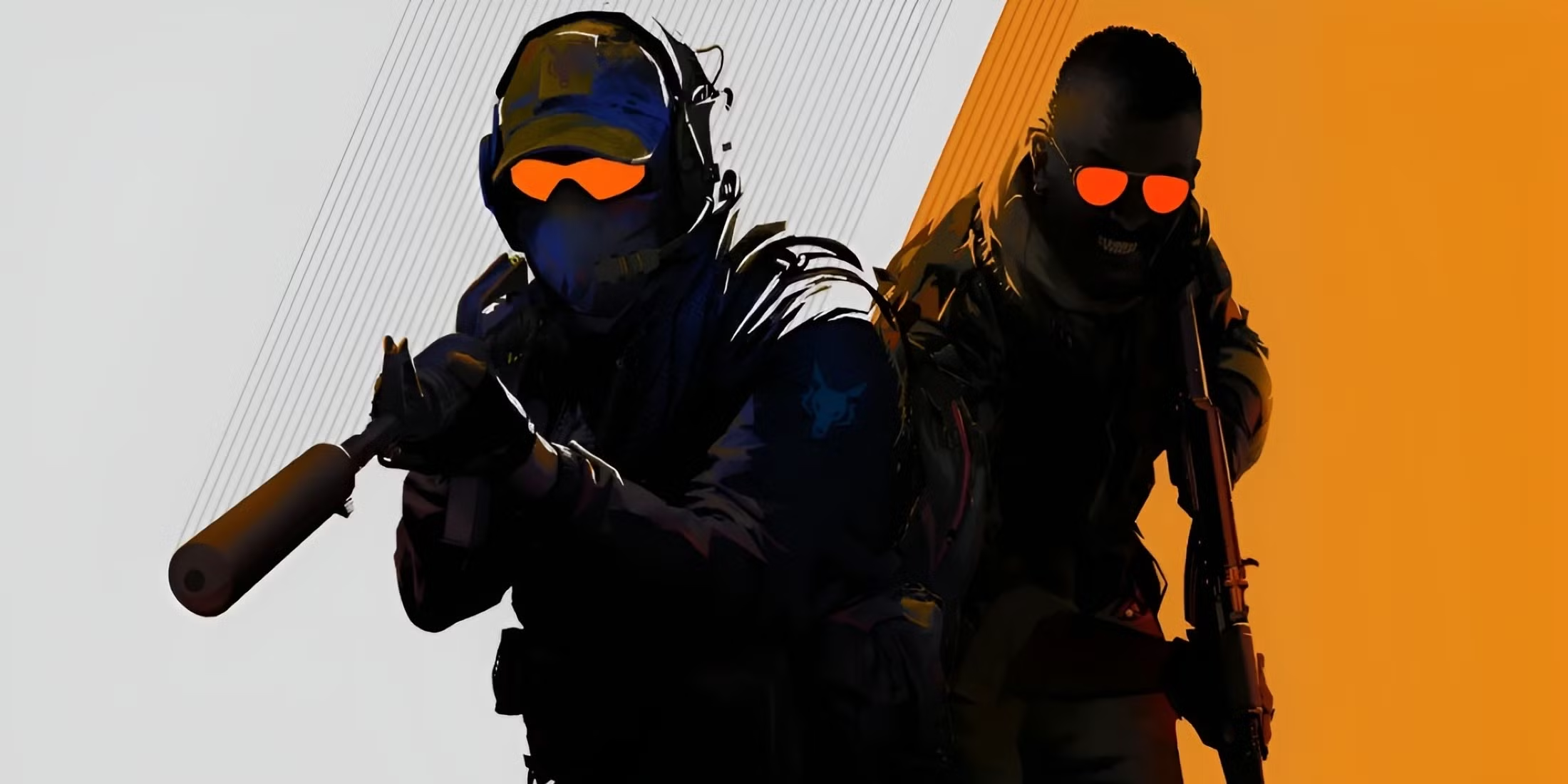
Despite major advances in graphics and hardware, the game has preserved its core gameplay that made it popular in the first place.
We will take a look at how each new version introduced technical improvements without fundamentally deviating from the core dynamics – objective-based rounds and precise gunplay.
Counter-Strike 1.6 Built the Foundation
In the early 2000s, Counter-Strike 1.6 became the golden standard for first person shooters. It came with the whole package – perfect gameplay for competitive play, interesting maps such as Dust2, Inferno, Nuke, and great potential for nurturing a dedicated community.
Economy management, and knowledge of the map became essential in addition to the sharp reflexes and accuracy required for sharpshooting. These aspects of the game guaranteed that it has a lot more depth than traditional shooters.
People around the world absolutely loved the concept and filled the internet cafes to engage in tactical shootouts and become part of the first CS2 clans.
There’s a consensus that CS1.6 is the version that established the core identity of the game, but some professional gamers go as far as to say they prefer it to newer versions.
Counter-Strike: Source Introduced a New Engine
2004 came with an awesome new visual upgrade for the Counter-Strike series, released by Valve – Counter-Strike: Source. The game delivered improved graphics, realistic physics, dynamic lighting, and smoother animations.
The environmental effects were also from a new generation, being more advanced and making the maps look more realistic than ever before.
The change, however, was not welcomed by all players. Some players were convinced the movement and weapon mechanics were not as precise as before.
Despite these accusations, the game attracted a very large community and introduced many enthusiastic new players to the franchise.
Global Offensive Expanded the Audience
In 2012, Counter-Strike: Global Offensive launched and took the gaming world by storm. This CS version became one of the most successful ones, and it received regular updates by Valve in the next decade after the release.
The developers added new maps, operations, matchmaking improvements, and balance updates to keep the game up to scratch and contemporary.
One of the most successful features was the introduction of skins, which created an in-game economy that is alive today. The cosmetic items created a very real trading market and gave players a new way to showcase their style and express their personality.
The Global Offensive era delivered new heights in the Esports scene for Counter-Strike, with major championships, millions of online viewers recorded, and prize pools worth millions of dollars.

Counter-Strike 2 Modernises the Experience
The Source 2 engine delivered better lighting, high-definition textures, and life-like reflections together with more realistic visual effects. Classic maps like
Valve replaced the Source Engine with Source 2, delivering better lighting, higher-quality textures, more realistic reflections, and redesigned visual effects. Classic maps like Dust2 received significant graphical improvements while preserving their key characteristics.
One big improvement in the networking model – the sub-tick system – allowed the game to record player actions with greater timing accuracy. Thanks to this new system, movement, shooting, and grenade throws felt more responsive
 English
  Español de México
  Deutsch
  Español
  Italiano
  Português do Brasil