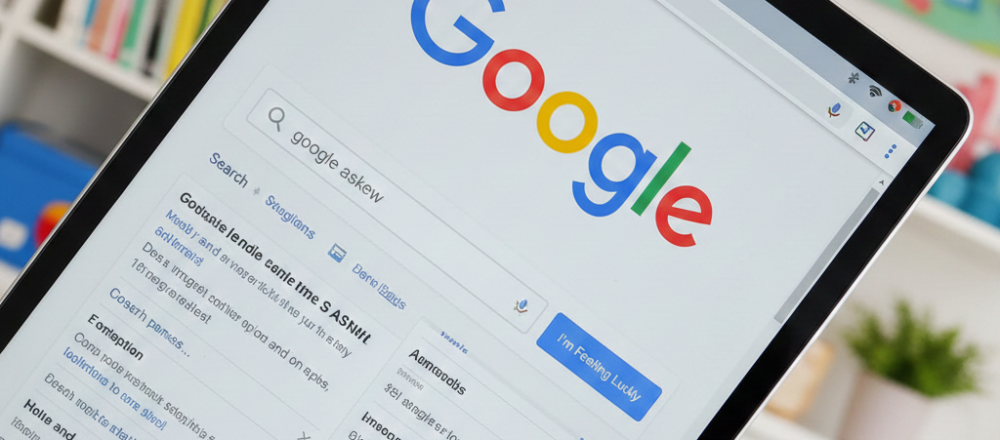
Google Gravity is a playful web experience that turns a familiar search page into something unexpected. Instead of staying fixed, every visible element drops, slides, and bumps into others as if gravity suddenly took control. Even today, this experiment continues to attract attention because it transforms a simple layout into an interactive scene.
A Search Page That Refuses to Stay Still
Google Gravity recreates the standard Google interface for a brief moment. Right after loading, the structure breaks. Buttons, text, and the logo lose their position and tumble downward. Nothing stays locked in place. Each item reacts like a real object, responding to movement and collisions.
This effect surprises users because it challenges the typical behavior of a search page. There is no goal or task. The entire idea is built around fun and curiosity. Google Gravity exists to entertain, not to enhance search results.
Why Google Gravity Still Gets Attention?
Even in the present time, Google Gravity continues to be shared and discussed. The reason is simple. It mixes a well-known design with unexpected motion. People enjoy dragging pieces, throwing them across the screen, and watching them crash together.
It also demonstrates the flexibility of web pages. Without changing the content, the experience feels completely new. That contrast keeps users engaged for a few minutes, which is exactly what this experiment aims to do.
How the Gravity Effect Is Created?
The falling motion is not an error. It is driven by scripted behavior that controls the movement of each element. The process follows a clear sequence.
| Stage | What Happens |
| Initial load | The page appears normal for a moment |
| Script start | Motion rules are applied to elements |
| Release | Items drop and spread across the screen |
| Interaction | Users drag and move objects freely |
Each visible part behaves independently. When moved, it responds instantly, making the page feel alive and reactive.
Ways Users Can Interact
Google Gravity allows simple but engaging actions. These actions make the experience feel hands-on rather than passive.
| Action | Result |
| Clicking and dragging | Elements can be lifted and tossed |
| Letting go | Objects fall back naturally |
| Repeating movement | Items collide and scatter again |
There are no limits to interaction. Users can play with the layout as long as they like.
Accessing Google Gravity Today
The original version is no longer hosted directly by Google. However, many working versions are still available online. Searching for “Google Gravity” leads to pages that recreate the same falling behavior. These versions run inside the browser and work best on desktop screens.
A Simple Idea With Lasting Impact
Google Gravity remains memorable because it breaks expectations. It takes a stable page and removes all order. That single idea keeps it relevant and enjoyable, even now.