
There is something special about finding a game that does not feel like it came from a marketing department.
Maybe it is a tiny horror project made in a week. Maybe it is a strange browser game with one clever mechanic.
Maybe it is a retro-inspired platformer that looks like it escaped from an old cartridge but plays like something completely modern.
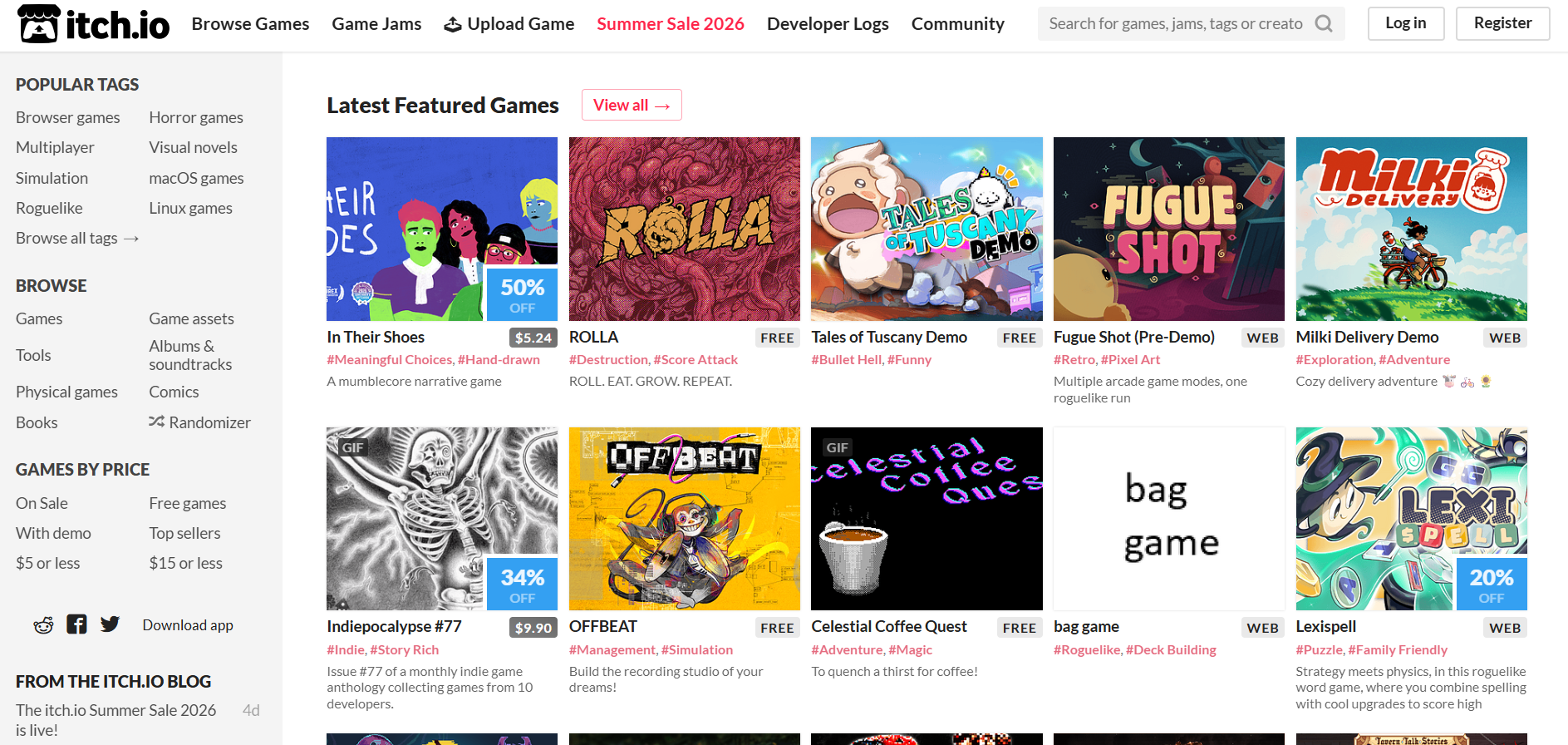
Maybe it is a visual novel, a puzzle experiment, a game jam prototype, or a passion project that would never survive a traditional publisher meeting.
That is the kind of discovery itch.io is built for.
While major storefronts are great for big releases, discounts, and polished commercial games, itch.io has become one of the most interesting places on the internet for players who like the edges of gaming culture.
It is where experimental creators, solo developers, hobbyists, modders, zine makers, and small teams can upload projects without waiting for permission from a massive platform.
For retro gaming fans, browser game players, and anyone who enjoys finding hidden gems, that matters.
Itch.io Feels Closer to the Old Internet
Part of the appeal of itch.io is that it does not feel overly sanitized. It still has some of that old internet energy: strange pages, niche communities, weird experiments, personal projects, and games that might only exist because one person really wanted to make them.
The platform describes itself as an open marketplace for independent digital creators, with a focus on independent video games. Creators can sell what they make, set their own prices, design their own pages, and update their projects whenever they want.
That openness creates variety. You can find polished indie releases, but you can also find prototypes, student projects, game jam entries, retro-style experiments, tabletop tools, soundtracks, assets, comics, and interactive fiction. It is not always tidy, but that is part of the charm.
For players who grew up browsing fan sites, ROM hacking communities, Flash portals, freeware archives, and emulator forums, itch.io can feel familiar in the best way.
Game Jams Keep the Platform Weird
One of the strongest parts of itch.io is its game jam culture.
Game jams encourage developers to build something quickly around a theme, limitation, or creative prompt. The result is not always polished, but it is often memorable. A jam game might have rough edges, but it can also contain one idea that feels fresher than anything in a bigger release.
That is why itch.io is such a good place to browse when you are tired of the same genres repeating themselves. You can find:
- five-minute horror games;
- tiny puzzle experiments;
- retro arcade projects;
- surreal walking simulators;
- strange RPG Maker games;
- local multiplayer prototypes;
- browser games made for a weekend challenge;
- visual novels with extremely specific themes.
Some of these games will be forgettable. Some will be broken. Some will be brilliant. The fun is in digging.
Browser Games Make Discovery Easier
For retro and casual players, browser games are one of itch.io’s biggest advantages. Not every project requires a download, install process, launcher, or account. Many games can be played directly in the browser, which makes experimentation easier.
That matters because friction kills discovery. If a game looks interesting but requires a huge download, a new account, and a complicated setup, players may skip it. A browser game lets someone try an idea instantly.
This is one reason itch.io pairs so well with retro gaming habits. Retro fans often care less about massive production value and more about feel, mechanics, art direction, music, and creativity. A small browser game can deliver all of that without needing a blockbuster budget.
Indie Discovery Comes With Some Responsibility
Open platforms are exciting, but they also require common sense.
Because itch.io lets many different creators upload projects, players should be more thoughtful about what they download.
That does not mean the platform is unsafe by default. It means players should treat unknown downloads the same way they would treat any independent software.
Before downloading, it helps to check:
- the creator’s profile;
- comments and ratings;
- update history;
- file type and platform;
- whether the project has a community around it;
- whether the page links to a known developer website or social account.
Browser games are usually easier to test quickly, but downloadable files still deserve attention. If something looks suspicious, asks for unnecessary permissions, or comes from a page with no context, it is better to skip it.
The same logic applies to payments. Itch.io allows creators to sell games and even use flexible pricing models, including pay-what-you-want options.
Supporting creators is great, but players should still make sure they are on the real page, using official checkout flows, and not following random links from comments or social media.
Why Access Can Sometimes Feel Inconsistent?
Most of the time, itch.io is simple: find a game, open the page, play or download it. But there are situations where access can feel inconsistent.
A school, workplace, hotel, library, or public Wi-Fi network may block gaming sites or downloads. Some networks restrict certain file types.
Some regions may treat adult or user-generated content differently. Browser privacy settings, DNS filters, parental controls, and security software can also interfere with downloads or page loading.
There have also been larger platform-level debates around content availability. For example, itch.io has faced scrutiny around adult content and payment processor pressure, which led to changes affecting visibility and access for some NSFW games.
That kind of issue shows how indie platforms do not exist in a vacuum. Payment systems, regulations, moderation policies, and network restrictions can all affect what players are able to see or buy.
For most players, the important point is simple: not every access issue means the site is broken. Sometimes the network, region, browser, or content category is the real cause.
Where a VPN Fits In?
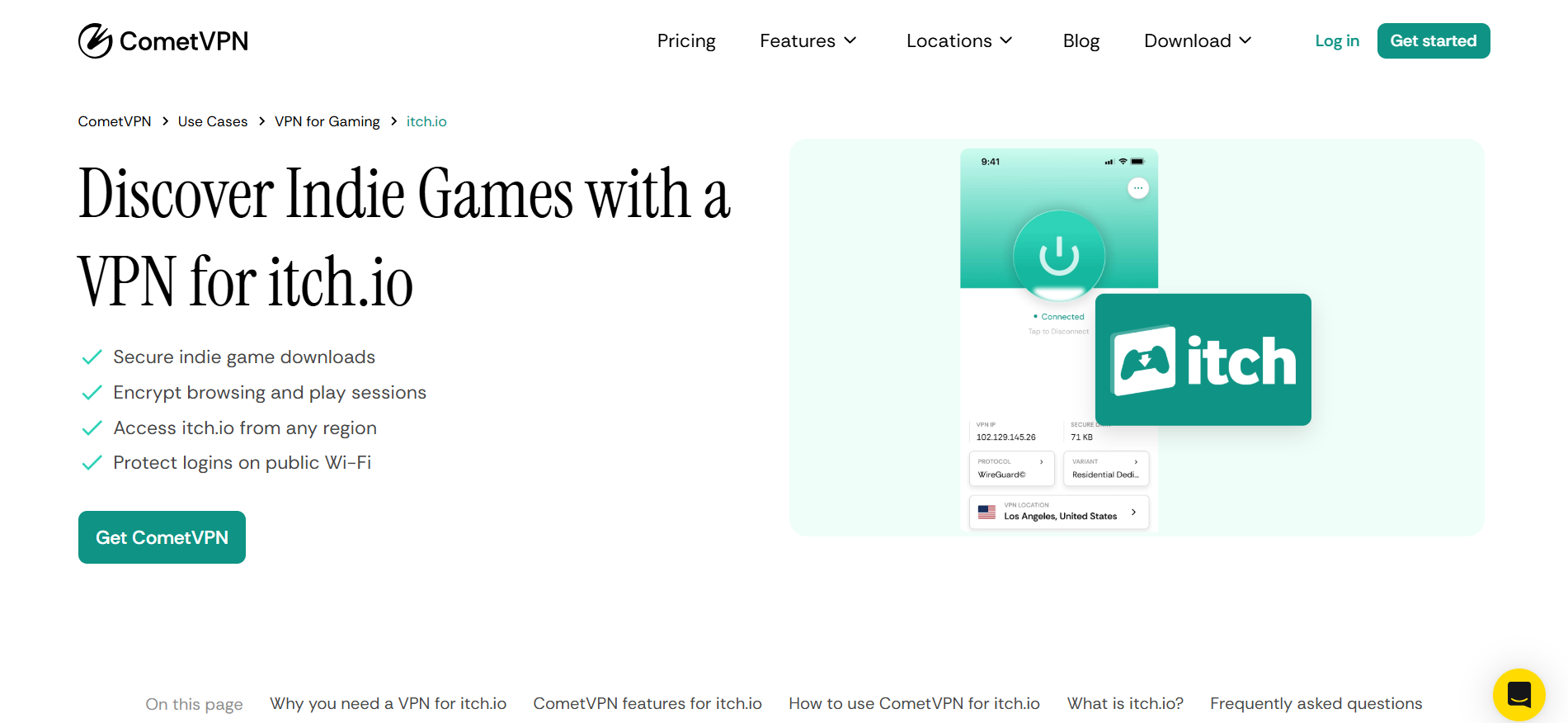
A VPN should not be treated as a magic button for gaming. It will not make every download faster, and it will not make a bad Wi-Fi signal good. In some cases, choosing a faraway VPN server can even slow things down.
But there are realistic situations where a VPN for itch.io can be useful. If a player is using public Wi-Fi, dealing with a network that blocks gaming sites, trying to protect privacy on a shared connection, or testing whether routing is causing slow downloads, a VPN can be part of the troubleshooting process.
The key is to use it carefully:
- choose a nearby server;
- compare downloads with and without it;
- avoid suspicious “free VPN” extensions;
- do not use it to break platform rules;
- keep your account and payment security in mind.
Used realistically, a VPN is not about turning itch.io into something it is not. It is about helping players access and browse indie gaming spaces more privately and consistently when their network gets in the way.
Itch.io Is Also Important for Developers
Players often think of itch.io as a place to find free or cheap games, but its importance goes beyond that. For developers, it is one of the easiest ways to put a game online.
According to itch.io’s creator documentation, developers can upload game files, screenshots, and create a customized landing page where the game is the focus. They can also set a minimum price and allow fans to pay what they want.
That flexibility is valuable. A solo developer does not need to build a storefront from scratch. A game jam team can publish quickly.
A creator can test a concept, update it often, and see how people respond. A small paid project can exist without needing to compete directly with giant releases on a mainstream store.
This is how gaming stays interesting. Not every idea should need a publisher, a pitch deck, or a massive production pipeline.
The Best Finds Are Often the Smallest
The most memorable itch.io discoveries are not always the biggest or most polished. Sometimes they are tiny projects that do one thing well.
A horror game with one perfect jump scare. A platformer with a clever movement hook. A puzzle game that teaches itself without words.
A retro shooter that captures the feeling of an arcade cabinet. A strange narrative experiment that would never work as a mainstream release.
These games remind players that creativity does not depend on budget. It depends on focus, personality, and the willingness to try something odd.
That is why itch.io remains valuable in a gaming landscape dominated by sequels, live-service updates, remakes, and huge franchises. It gives players somewhere else to look.
Final Thoughts
Itch.io is not just another game store. It is a discovery engine for the strange, personal, experimental side of gaming.
For players who love retro games, browser games, indie projects, and creative risks, it remains one of the best places to explore. You may not love everything you find, but that is part of the point. The platform rewards curiosity.
Just browse with the same awareness you would bring to any open marketplace: check creators, be careful with downloads, support projects through official pages, and protect your privacy when using shared or restricted networks.
The best part of indie gaming is that you never know what you will find next. On itch.io, that feeling is still alive.
 English
  Español de México
  Deutsch
  Español
  Italiano
  Português do Brasil