
Digital gaming has changed dramatically over the past century. What once required a physical machine, a handful of coins and a visit to an amusement arcade can now be accessed through a computer or smartphone.
The evolution of digital gaming is not simply a story of improved graphics and faster technology. It also reflects changes in entertainment habits, social interaction, business models and the psychology of players.

The development of casino gaming provides a particularly interesting example: mechanical slot machines evolved into electronic games, then digital casino platforms, and eventually mobile experiences available across different devices.
The modern online gaming environment brings together technologies and design principles that developed over several decades. A player exploring a platform such as slotsvader.com encounters a very different experience from someone using a traditional coin-operated machine in an arcade or casino.
Yet some elements remain familiar: visual feedback, anticipation, chance-based outcomes and the emotional response to winning or losing.
Understanding how these experiences evolved helps explain both the technological development of online casinos and the changing relationship between players and digital entertainment.
The Origins of Coin-Operated Entertainment
The history of coin-operated entertainment goes back much further than the first video game arcades. During the nineteenth century, mechanical amusement devices became increasingly common in public spaces.
These included fortune-telling machines, strength testers, mechanical displays and early viewing devices. Customers inserted a coin to activate a mechanism or access a short entertainment experience.
Slot machines also emerged during this period. Early models used mechanical reels and symbols, allowing players to receive a result after activating the machine.
Their operation was relatively simple, but the combination of chance, immediate feedback and the possibility of a prize proved commercially significant.
By the early twentieth century, coin-operated amusement machines had become part of a broader entertainment culture. Penny arcades brought together different types of machines, offering visitors an affordable way to enjoy short, individual activities.
These venues helped establish a commercial model that would later influence video game arcades: a small payment in exchange for a brief, repeatable experience.
The underlying principle was straightforward. A machine needed to attract attention, explain its operation quickly and provide an experience that encouraged people to return.
These ideas would remain relevant as amusement technology moved from mechanical systems to electronic and digital formats.
The Golden Age of Video Game Arcades
The 1970s marked a major turning point in the history of digital gaming. Electronic video games began moving beyond laboratories and experimental computer environments into commercial entertainment spaces.
Coin-operated machines allowed businesses to offer interactive digital experiences to a much wider audience.
Titles such as Pong helped establish video games as a recognisable form of commercial entertainment. During the late 1970s and early 1980s, arcade gaming expanded rapidly.
Games featuring space combat, racing, maze navigation and increasingly complex challenges became popular in shopping centres, restaurants, amusement halls and dedicated arcades.
Unlike mechanical amusement machines, video arcades offered dynamic visual experiences controlled by electronic hardware.
Players could interact with moving objects, respond to changing situations and compete for high scores. The experience was no longer limited to activating a mechanism and waiting for a result.
Arcades also introduced an important social dimension. Players could watch one another, compete for the highest score and exchange strategies.
Even when a game was played individually, the surrounding environment created opportunities for shared experiences and informal competition.
The commercial model still relied on repeated payments, usually through coins or tokens. Each attempt had a defined cost, making the relationship between money and play relatively visible. Players could see how many credits remained and decide whether another round was worth the expense.
From Mechanical Reels to Electronic Casino Games
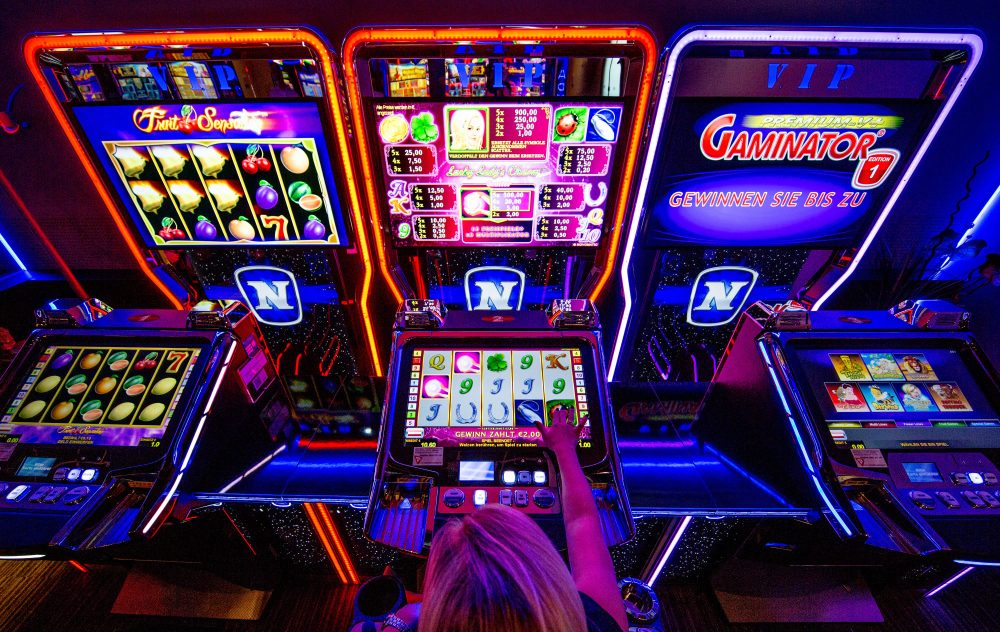
While video game arcades were developing, casino technology was undergoing its own transformation. Traditional mechanical slot machines gradually gave way to electronic systems, allowing manufacturers to introduce more flexible game mechanics and visual features.
A significant development was the introduction of microprocessor-based slot machines during the 1970s. Electronic components began replacing mechanical systems, making it possible to control game outcomes through programmed processes.
Over time, this transformation enabled more elaborate displays, additional paylines, varied bonus features and new forms of interaction.
The change was not only technical. Digital technology also gave casino operators new ways to manage machines and monitor their performance.
Electronic systems could record information about machine activity, transactions and usage patterns, creating opportunities for more sophisticated casino management.
For players, the experience became increasingly visual and interactive. Traditional reels were gradually supplemented or replaced by digital displays, animations and sound effects.
The physical movement of mechanical components was no longer essential to creating the impression of a spinning game.
However, the core structure remained recognisable: players placed wagers, received uncertain outcomes and interpreted the results through visual and auditory feedback.
The transition to digital systems changed how the experience was delivered, but not the fundamental role of chance.
The Internet Changes the Gaming Experience
The spread of the internet during the 1990s created opportunities for a new type of gaming environment. Instead of visiting a physical location, users could access digital entertainment through connected computers.
Multiplayer games, online communities and networked applications gradually changed expectations about where and how people could play.
Online gambling developed during this period as well. The first online casinos appeared in the mid-1990s, following advances in internet connectivity, gaming software and online payment systems. One early milestone was the launch of InterCasino in 1996.
The industry was still developing, and questions surrounding licensing, security, payment processing and consumer protection became increasingly important.
The internet removed some of the practical limitations associated with traditional casino venues. Players no longer needed to travel to a particular building or use a physical machine.
Games could be accessed remotely, while software updates made it possible to introduce new features without replacing hardware.
Online casinos also expanded the range of available games. Digital versions of traditional table games appeared alongside virtual slot machines and other formats.
Some platforms began offering live dealer experiences, combining online access with real-time video streams of physical gaming tables.
This development created a hybrid model: the convenience of remote participation combined with selected elements of the atmosphere and interaction associated with land-based casinos.
The Rise of Mobile Casinos
The next major stage in digital casino development was the widespread adoption of smartphones and mobile internet. As mobile devices became more powerful, gaming platforms adapted their interfaces for smaller screens and touch-based controls.
Mobile casino gaming changed the relationship between players and access. A desktop computer was no longer necessary, and users could interact with digital games from a wider range of locations.
Responsive websites and dedicated applications made it easier to navigate game libraries, manage accounts and access different features.
Mobile technology also influenced game design. Interfaces became more compact, menus were simplified, and visual elements were adapted for touchscreens.
Developers had to consider screen size, battery consumption, connection quality and the differences between mobile operating systems.
The convenience of mobile access also raises questions about the boundaries between entertainment and everyday activities. A physical arcade required a deliberate visit, while a mobile platform can remain available throughout the day.
This does not mean that every mobile player develops unhealthy habits, but it does make personal limits and responsible-use features particularly relevant.
How Digital Gaming Changed Player Psychology?
Technological progress has transformed more than the appearance of games. It has also changed the way players experience uncertainty, competition and rewards.
One important psychological factor is immediate feedback. Digital games can display results, scores, animations and sounds almost instantly. This creates a continuous interaction between the player’s actions and the information presented by the game.
In casino environments, the relationship between uncertainty and reward is particularly significant. Players do not know the outcome of an individual spin or round in advance.
The expectation of a possible win can create excitement, while the eventual result may produce satisfaction, disappointment or a desire to continue.
Research into reward learning has identified dopamine-related processes as part of the brain’s response to expected and unexpected rewards. Dopamine is involved in motivation, learning and the evaluation of outcomes.
It should not, however, be described simply as a chemical responsible for pleasure. Its functions are more complex and include helping the brain update expectations based on experience.
Digital design can make these processes more noticeable. Animations, sound effects, countdowns and near-miss presentations can influence how players perceive individual outcomes.
A near miss, for example, occurs when a result appears close to a winning combination but does not actually produce a win.
Research suggests that such experiences can affect attention and motivation, although responses vary between individuals and studies.
Another important development is the increased availability of personalised experiences. Digital platforms can use account information and activity data to provide recommendations, display relevant content or communicate promotional offers.
These features can improve navigation, but they also make transparency and responsible data practices important considerations.
Online Casino Bonuses and the Changing Economics of Play
Promotional offers have become a familiar part of the online casino environment. Welcome bonuses, free spins, cashback offers and loyalty programmes are examples of incentives that developed alongside digital platforms.
Traditional arcades generally charged players for each attempt, with the payment made directly at the machine.
Online platforms can use a more varied set of commercial arrangements. Promotional credits and other offers may provide additional opportunities to participate, subject to specific conditions.
From a business perspective, bonuses are marketing tools designed to attract attention, encourage account registration or support customer retention.
From a player’s perspective, their value depends on the terms attached to them. Wagering requirements, game restrictions, expiry dates and withdrawal conditions can all influence what an offer actually provides.
The psychology of promotional incentives is also worth considering. A bonus may create a sense of additional value or encourage a player to return to a platform.
However, promotional funds should not be confused with guaranteed income, and an offer does not change the underlying probability of a game’s random outcome.
As online casino technology continues to develop, clear communication about promotional terms and spending becomes increasingly important.
Players benefit from understanding the conditions before accepting an offer rather than evaluating it solely by its advertised size.
Social Interaction: From Arcade Crowds to Online Communities
One of the most noticeable differences between traditional arcades and online gaming is the way players interact with one another.
Physical arcades created shared environments where people could watch games, compete directly and discuss their experiences.
The social atmosphere was part of the entertainment itself. Even players who did not know each other could become involved in informal competitions or conversations.
Online gaming introduced different forms of interaction. Multiplayer platforms allowed users to communicate across geographical boundaries, while forums and communities provided spaces to exchange information and discuss games.
Online casinos have also incorporated selected social features. Live dealer games, chat functions and tournaments can create opportunities for interaction, although the experience differs from being physically present at a casino table. The quality and availability of these features vary between platforms and jurisdictions.
This evolution demonstrates that digital gaming is not necessarily an isolated activity. Technology has changed the location and format of social interaction rather than eliminating it.
Regulation, Security and Responsible Gaming in the Digital Era
The transition from physical machines to online platforms has created new challenges for regulators and operators.
In a traditional casino, gaming activity takes place within a defined physical location. Online platforms may serve users across different regions, each with its own laws and licensing requirements.
As a result, regulation has become an important part of the digital gambling landscape. Depending on the jurisdiction, requirements may cover licensing, identity verification, payment processing, game fairness, advertising and consumer protection.
Digital technology also makes it possible to implement tools that were difficult to provide through traditional machines.
These can include account-based spending limits, time reminders, self-exclusion options and access to personal transaction histories. Their availability and effectiveness depend on the operator and the applicable regulatory framework.
Security is another important consideration. Online platforms handle personal information and financial transactions, so data protection, secure payment systems and account authentication are essential elements of responsible operation.
The evolution of digital gaming therefore involves more than technical innovation. It also requires systems that help protect users and make the conditions of participation understandable.
What Comes Next for Digital Gaming?
Digital gaming continues to evolve as new technologies become more accessible. Cloud computing, virtual reality, artificial intelligence and improved mobile connectivity are influencing the development of interactive entertainment.
Virtual reality may create more immersive environments, allowing players to interact with digital spaces in ways that resemble physical locations.
Cloud-based systems can reduce the need for powerful local hardware by processing games remotely. Artificial intelligence may support customer service, content recommendations and certain aspects of game development.
In casino gaming, these technologies could introduce new forms of presentation and interaction. Virtual environments may recreate elements of traditional casino architecture, while improved streaming technology can make live dealer experiences more accessible.
However, technological novelty does not necessarily improve the quality of a gaming experience. The important questions will remain whether products are secure, transparent, accessible and designed with appropriate safeguards. Innovation is most meaningful when it improves functionality without overlooking the interests of users.
Conclusion
The evolution of digital gaming from coin-operated arcades to online casinos reflects a much broader transformation in entertainment technology. Mechanical amusement machines introduced the idea of paying for short interactive experiences.
Video game arcades made electronic entertainment widely accessible, while digital slot machines brought programmable systems into casino environments.
The internet and smartphones then removed many of the physical limitations associated with traditional gaming venues.
Despite these changes, some aspects of the experience have remained remarkably consistent. Players continue to respond to uncertainty, competition, visual feedback and the possibility of rewards. What has changed is the speed, accessibility and complexity with which these elements are delivered.
Understanding this history helps put modern online casinos into perspective. They are not entirely separate from earlier forms of gaming, but rather the result of decades of technological and cultural development.
As digital entertainment continues to advance, balancing innovation with player awareness, transparency and responsible gaming will remain essential.