
Counter-Strike 2 has given American esports fans a familiar problem in a sharper frame. The game is popular, the tactical depth is obvious, and the United States can host major events with real atmosphere.
The harder question is whether U.S.-connected teams can build enough stability to turn scattered strong runs into a dependable competitive identity.
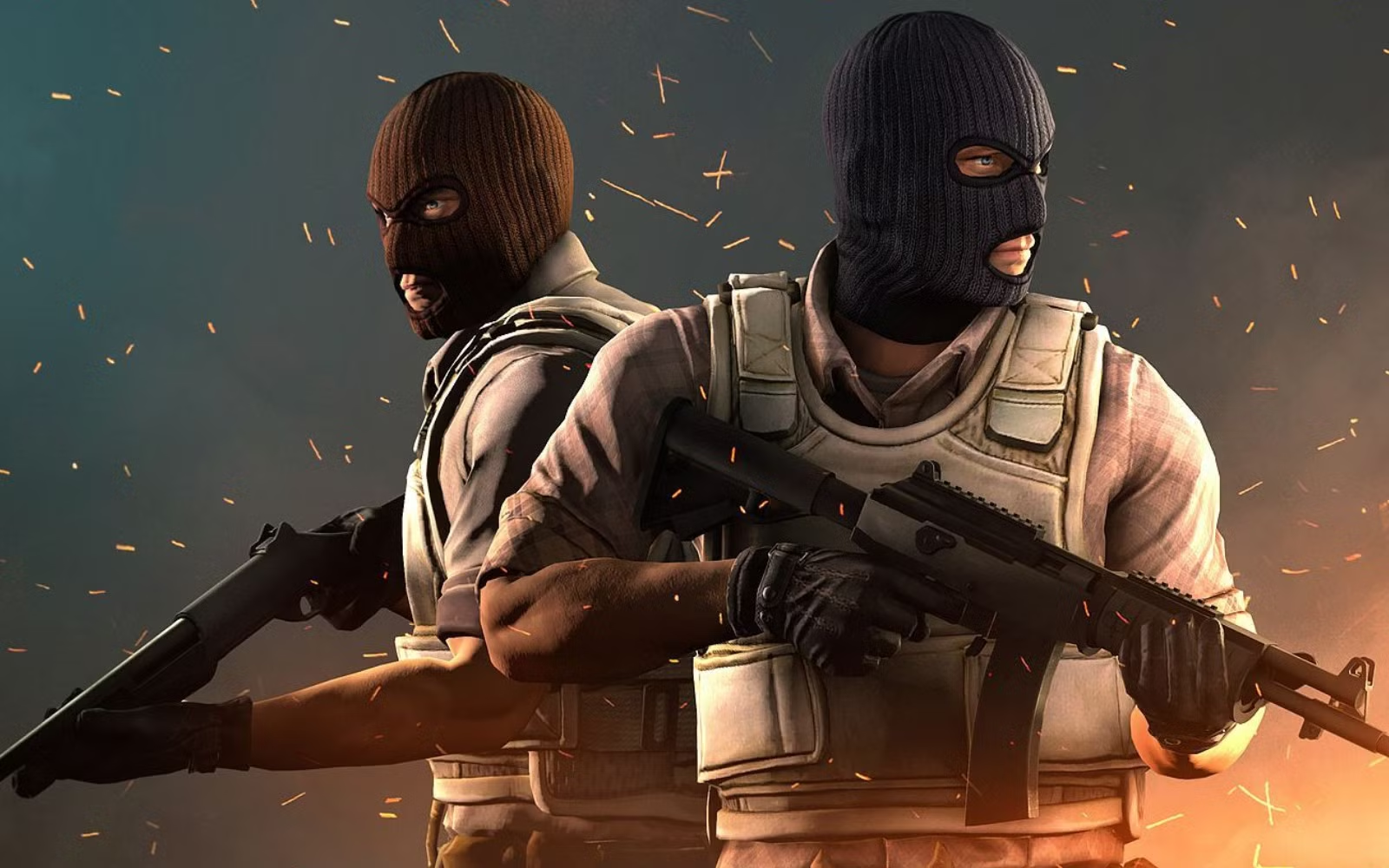
That question matters because CS2 is not just a shooter with aim duels. It is a game of systems: economy calls, spacing, utility discipline, trading patterns, and mid-round nerve.
For esports fans who also follow betting opportunities, betting apps for iPhone can be a useful resource for exploring betting apps and finding options suited to following matches on the go.
Team Liquid, Complexity, M80, and Wildcard show four different versions of the American Counter-Strike challenge. Liquid represents global reach with North American roots. Complexity represents legacy and volatility.
M80 represents a newer project trying to give the region structure. Wildcard represents the pressure on ambitious teams to survive roster churn and qualify through crowded pathways.
Why CS2 feels different for U.S. teams?
Counter-Strike has always punished shallow development. A team can win highlight rounds with individual skill, but long-term success depends on repeatable habits.
That is where U.S. teams have often struggled compared with deeper European ecosystems, where scrim density, travel distances, and opponent variety create a more demanding daily environment.
CS2 made that challenge more visible. The shift from CS to CS2 changed details around movement feel, utility interactions, smoke behavior, and map pacing. Teams had to rebuild routines while also competing in a ranking-driven circuit where every event can affect future invitations.
For U.S.-connected organizations, the issue is not a lack of talent. It is the connection between talent, structure, and time. The region needs teams that can keep cores together long enough for style to become muscle memory.
Team Liquid: the global brand with North American memory
Team Liquid is the most complicated case in this group. The organization is global, the rosters have often been international, and its identity cannot be reduced to one country.
Still, Liquid remains one of the names American CS fans instinctively track because of its long Counter-Strike history and its role in the North American conversation.
That creates a high bar. When Liquid loses, it is rarely read as just one team having a bad day. It becomes a referendum on whether a major organization can still connect star power, leadership, and map discipline in a region that needs reference points.
Liquid’s value to U.S. CS2 is partly symbolic. It keeps the American audience attached to elite Counter-Strike even when the roster is not purely domestic.
The risk is that symbolism alone does not win late-round retakes, close Ancient halves, or best-of-three series against disciplined European lineups.
Complexity: legacy, pauses, and the cost of instability
Complexity has a different weight. Established in 2003, the organization carries one of the longer histories in esports, and its Counter-Strike legacy matters to American fans who remember earlier eras of the scene. Complexity’s story also shows why nostalgia is not a development model.
At different points, Complexity has been a useful measuring stick for North American ambition. The brand had infrastructure, name recognition, and a home-market connection that made it easy to understand as an American CS reference. When the team was active and competitive, it gave the region a familiar banner.
The caution is obvious: stable presence is not guaranteed. If a legacy organization steps back, loses roster continuity, or spends time without an active lineup, the region loses more than five players. It loses practice quality, content gravity, fan attention, and another pathway for developing talent.
M80: the newer project with a regional purpose
M80 matters because it feels less like a museum piece and more like a test case. The organization entered Counter-Strike with a North American-centered idea, then had to prove that a newer brand could survive the same pressures that have worn down older projects. That makes M80 important even when results are uneven.
A team like M80 gives the U.S. scene something practical: reps. It creates matches, pressure, media visibility, and a reason for fans to follow regional qualifiers with more than casual interest. That may sound modest, but in Counter-Strike, modest infrastructure compounds.
The interesting part is whether M80 can build a recognizable style. Is the team aggressive by design or only by necessity?
Does it win through preparation or chaos? Can it keep enough continuity to make role development visible over several events? These are the questions that separate a temporary roster from a regional pillar.
Wildcard: ambition in a crowded lane
Wildcard sits in the most fragile part of the U.S. CS2 picture. The organization has shown ambition in Counter-Strike, but ambition in this scene is expensive. It requires scouting, coaching, travel, patience, and the ability to absorb losses without tearing the project apart every few months.
That pressure explains why Wildcard is useful to watch. Smaller or mid-tier organizations often reveal the true health of a region faster than the biggest names do.
If they can qualify, retain players, and improve across event cycles, the scene has depth. If they constantly reset, the region becomes dependent on one or two headline brands.
Wildcard’s challenge is to become more than a spoiler. Upsets are valuable, but the next step is repeatability: cleaner anti-ecos, calmer late rounds, stronger map vetoes, and fewer collapses after roster changes. In CS2, consistency is usually built in those unglamorous details.
The U.S. CS2 comparison table
The four teams do not represent the same stage of development. That is what makes the comparison useful. Each one exposes a different pressure point in American Counter-Strike.
| Team | U.S. relevance | Main strength | Main question |
| Team Liquid | Global organization with deep North American Counter-Strike memory | Brand reach, elite expectations, international pull | Can star power and structure turn into stable title-level form? |
| Complexity | Long-running esports organization with American legacy | History, fan familiarity, past regional leadership | Can a legacy banner maintain continuous CS2 relevance? |
| M80 | Newer American-connected project investing in Counter-Strike | Regional reps, ambition, development value | Can the team convert promise into repeatable international results? |
| Wildcard | Ambitious North American organization in the qualification grind | Upset potential, hunger, roster experimentation | Can it move from dangerous outsider to dependable contender? |
The table points to the same conclusion from four angles. U.S. CS2 does not need one miracle lineup as much as it needs durable projects. A region becomes strong when multiple teams improve at the same time.
What consistency actually means in Counter-Strike?
Consistency is often misunderstood as winning every match. In CS2, it is more specific. A consistent team has recognizable defaults, understands its own economy choices, and does not need every star player to overperform just to stay competitive.
For U.S. teams, the checklist is practical:
- Stable roles: players need time to learn when to initiate, trade, lurk, or anchor.
- Map identity: a team should have at least two maps that opponents must seriously respect.
- Late-round calm: close rounds should look planned, not improvised.
- Roster patience: short-term losses should not automatically trigger full resets.
- International reps: domestic wins matter more when they translate against stronger regions.
These details are not glamorous, but they decide careers. A team can win a pistol round with mechanics. It wins a season with habits.
Why the American stage still matters?
The United States still matters to Counter-Strike because it can provide scale. Events in cities such as Dallas and Austin show that the audience is there when the product feels important.
The 2025 Austin Major reinforced that point by putting elite CS2 in a U.S. arena setting and giving American fans a major-stage reference close to home.
That visibility helps, but it does not solve the competitive problem by itself. A major event can energize a market for a weekend.
A healthy scene needs year-round structure: teams, coaches, academies, tournament access, and organizations willing to stay through imperfect results.
Liquid, Complexity, M80, and Wildcard tell that story better together than alone. One carries expectation, one carries legacy, one carries the newer regional project, and one carries the outsider’s pressure. Their paths are different, but their shared problem is the same.

The next useful benchmark
The next benchmark for U.S. CS2 should not be hype. It should be evidence. Can multiple American-connected teams appear in meaningful international events?
Can they keep cores together? Can their losses look competitive rather than confused? Can a younger player develop without needing to leave the region immediately to be taken seriously?
Those are the questions worth tracking. Counter-Strike 2 has already given the United States the stage, the audience, and the storylines. What it has not yet guaranteed is continuity.
That is why the search for consistency is the real American CS2 narrative. Not one upset. Not one nostalgic logo. Not one promising roster announcement. The scene needs projects that keep showing up, keep learning, and keep making the region harder to ignore.