
The more society is pushed toward technological advances and accessibility the likes of which we have never seen, the more it seems that people are gravitating toward nostalgic experiences and products.
From television series reboots to the baggy-jean renaissance to the returns of 1990s and early-2000s pop icons to the mainstream, sentimentality feels like it’s surging just as much as, say, artificial intelligence.
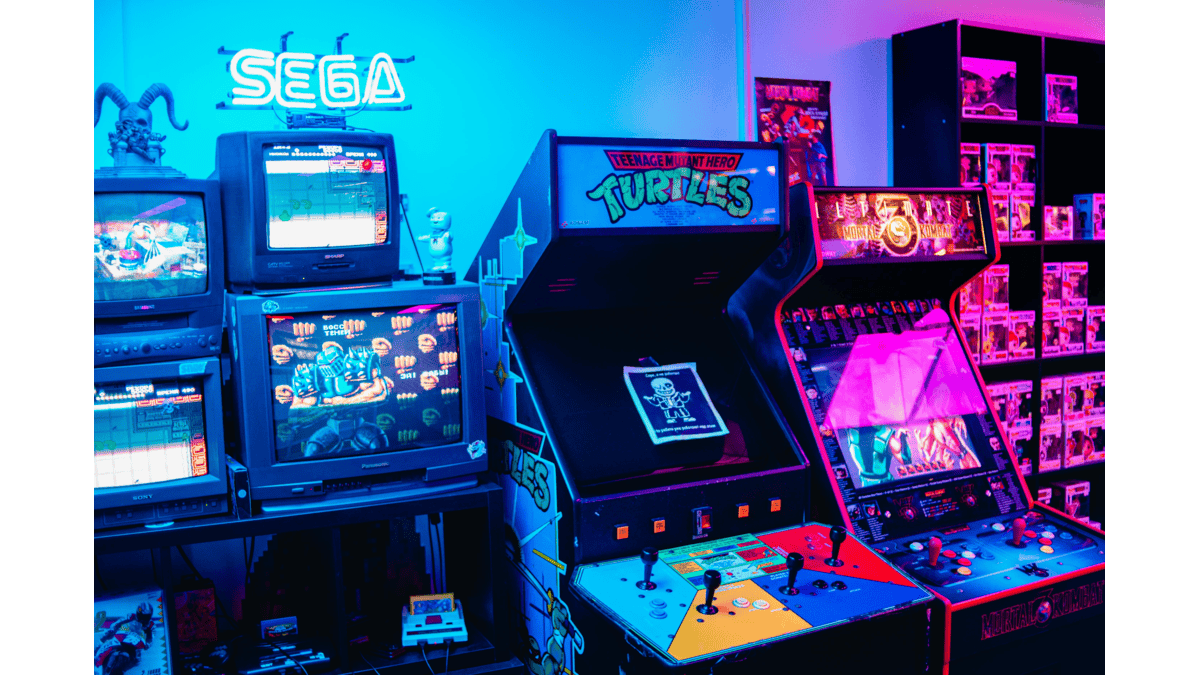
This trend applies to retro video games and the brands behind them. Nintendo has made its catalog available across all handhelds.
Atari is making acquisitions like it’s in the 1970s. The opening of brick-and-mortar retro arcades are on the rise—not relative to the distant past, but certainly in comparison to recent vintage.
Heck, even gaming adjacent industries are leaning into the wistfulness. Check out a party-supply store around Halloween. It will be inundated with costumes for vintage-gaming characters like Mario, Donkey Kong, Sonic the Hedgehog, Link, Pac-Man, etc.
Brands are releasing retro-gaming collabs for, well, anything. Want to see your favorite sports team’s logo given a Teenage Mutant Ninja Turtle spin? There’s a store for that. Some of the top Vegas betting sites theme their contemporary games after retro titles.
Big-time movie studios are bankrolling massive budgets for both live-action and animated productions based on a retro game’s character.
All of which raises a short and simple yet salient question: What gives? More eloquently, what is driving people back to video games of the past? Let’s explore.
Modern Gaming Burnout is Real
Optionality is among the primary draws of modern gaming. Or rather, it’s supposed to be among the primary draws.
The breadth of different titles and consoles is seemingly endless. Accessibility is no longer a barrier. You can download apps on your phone; purchase handhelds that can be connected to living-room setups; play online; and of course, put together a traditional at-home console setup.
Throw in expansion packs, sequents, extensions and the like, and the gaming space is, like many other industries, oversaturated with options. The sheer volume is enough to overwhelm consumers, who long for the simplicity they associate with their youth.
What’s more, retro gaming isn’t just receiving a boon from users who were around during their heyday. As Molly Jones writes for Game Space, younger modern-day video-game junkies are falling in love with the uncomplicated nature of retro games:
“Players are returning to titles that are easy to understand and quick to get started with. Clear objectives and responsive controls offer a different type of engagement compared to large-scale modern releases, especially for those who prefer short onboarding or simple systems. Not everything needs to be layered to be effective. There is also a shift in how players value time. Short sessions and immediate gameplay appeal to those who want quick access without committing hours to a single session. That preference is influencing both design and distribution, and developers are paying attention.”
This helps explain why newer releases of vintage games with more stratified objectives may not fare as well as the originals. And like Jones, it is influencing how developers approach building out new games from scratch.
New Games are Accessible, But Also Expensive
Despite gaming being a more accessible activity than ever before, top-of-the-line experiences create a clear barrier for entry with their price point.
That is a turnoff for many users—particularly younger ones, who don’t have income to spend, as well as older-generation gamers who long for back-in-my-day operating costs.
“New games can be too expensive, they can also be too long,” Rolling Stone’s senior gaming editor Christopher Cruz explained during an October 2025 interview with Back Market. “I see people investing in one or two big games a year, or just fully committing to whatever live-service title they’re hooked on.”
Revisiting retro games is far cheaper. Most can be played for free. If not, you are able to pick up subscriptions or downloadable versions on the relative cheap.
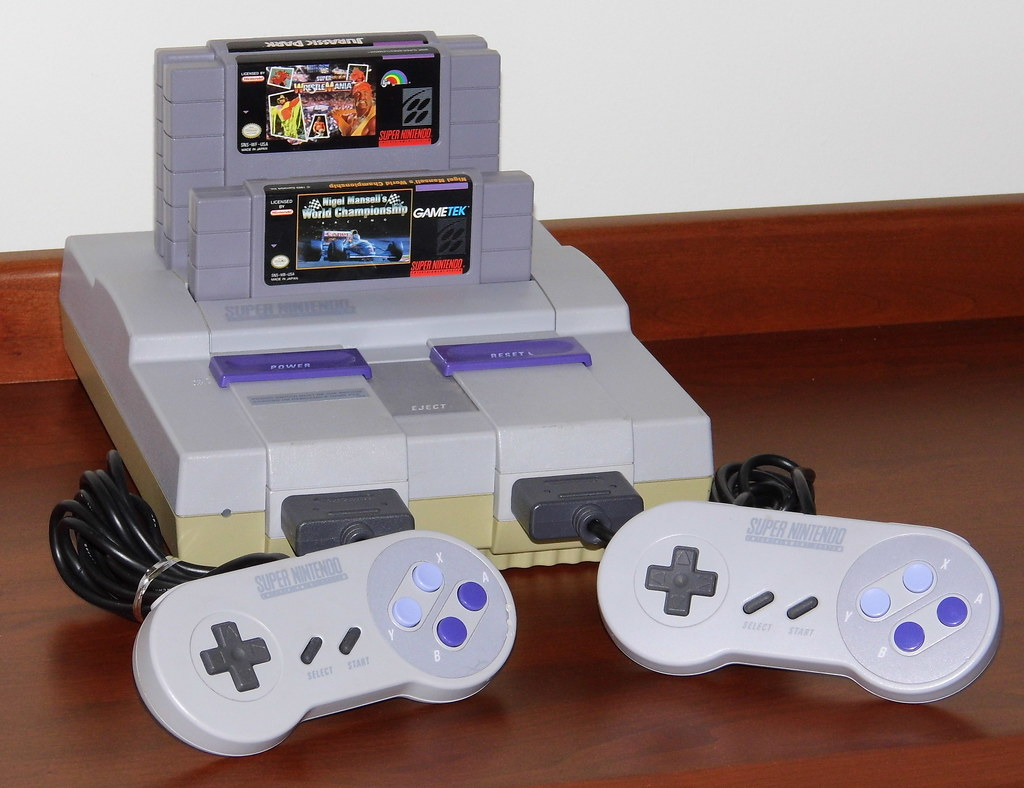
This also applies to the consoles themselves. En vogue at-home consoles and even new handhelds can run a small fortune. You can pick up a used Super Nintendo bundle, for instance, without spending $100.
Nostalgia is Also One Heck of a Drug
Through it all, though, so much of the interest being funneled to retro gaming is rooted in nostalgia. Infectious nostalgia, we might add.
Video games are now basically five decades old. That means we now have multiple generations’ worth of gamers likely to show interest in titles from their past. This increases demand by default.
On top of that, nostalgic gamers are driving newer users to these older titles. Younger gamers want to experience the hype for themselves. It is no different than tuning into a classic decades-old movie or show that’s supposed to be a landmark work of art.
Explaining the upswing in nostalgia among millennials and gen Xers, specifically, isn’t all that hard, either. Some think it happened at random. It didn’t. Ever since the COVID-19 pandemic around a half-decade ago, there is an increased tendency to lionize the path.
This phenomena was especially powerful when social distancing and restrictions were at their peak. The absence of recreational interaction naturally led people to think about “simpler” times, in which a global pandemic wasn’t tearing its way through the planet.
Important still, developers during this span tailored gaming experiences off the concept of remoteness.
That trend didn’t entirely fade as the world reopened. So many social habits and constructs changed forever. Our penchant as humans to interact—and transact—online, from afar, reshaped so many industries.
Older and newer gamers alike are, in return, exhibiting more appreciation for direct experiences. They want to feel control in their hands. They want multiplayer games to take place in-person rather than online.
Retro games will always satisfy those requirements, even if they’re just a reminder of what it was like to hang around the arcade or at a friend’s house or simply just hold onto a corded controller rather than a one-piece handheld.
This is all to say: The surge of retro gaming interest is neither an accident nor a trend. It a natural byproduct of what’s changed over the years and decades, and more critically, it seems here to stay.
 English
  Español de México
  Deutsch
  Español
  Italiano
  Português do Brasil