
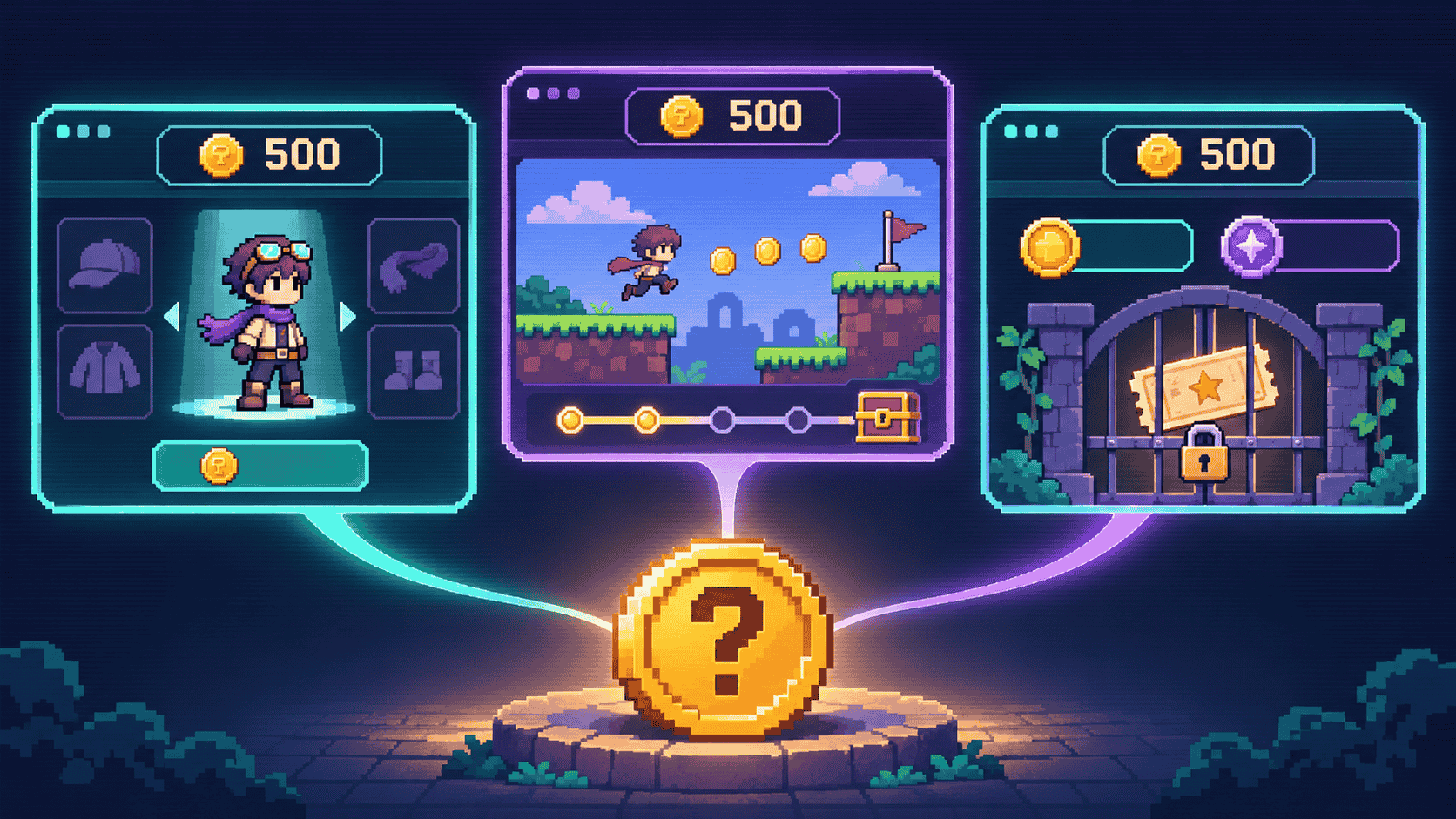
A coin balance is a familiar feature in gaming, whether displayed in a mobile puzzle game, a social casino, or an online gaming platform.
A number with a coin symbol immediately tells players they have something available to use. However, while the interface may look familiar, the meaning of that balance can vary significantly between products.
Virtual currencies can represent purchased credits, gameplay resources, or tokens connected to potential prize redemption. Although these systems may look similar, they operate differently and create different expectations.
For game designers, the challenge is to make these distinctions understandable without sacrificing the simplicity and accessibility of familiar gaming interfaces.
Different types of currency systems
Virtual currencies have become an essential part of modern game design. They provide a convenient way to represent progression, reward participation, and give players access to additional features.
However, not all currencies serve the same purpose. We will look more closely at the different types of currency systems.
Purchased currencies
Purchased currencies are acquired through transactions and used within a gaming environment. Players might buy credits to unlock content, access features, or extend gameplay.
Clear pricing information and consistent conversion displays help users understand what they receive and how they can use their balance.
Currencies linked to gameplay
Players typically earn gameplay resources by completing levels, taking on challenges, or reaching milestones.
Their primary purpose is to support progression and engagement. A growing balance communicates achievement and gives players additional opportunities within the game.
Prize redemption currencies
Currencies tied to prize redemption add another layer of complexity. Some social gaming and sweepstakes-style platforms use multiple currencies, each with a distinct function.
For example, Gold Coins (GC) are generally associated with free-play entertainment, while Sweepstakes Coins (SC) can be used in gameplay that may offer opportunities to redeem winnings for prizes, subject to platform rules and conditions.
Although all these currencies might appear together on the same screen, they’re not interchangeable. Players need to understand their individual purposes and the conditions attached to their use.
Familiar Design with Different Mechanics
The gap between familiar interfaces and unfamiliar currency rules is particularly relevant to platforms that resemble traditional casino experiences while operating through virtual currencies.
In an interview with Patrik Lidin, the Head of Content at JustGamblers he explains that sweepstakes platforms can resemble real-money casinos while using currencies with distinct functions: Gold Coins for entertainment only play and Sweepstakes Coins for gameplay where winnings may qualify for prize redemption under platform rules.
This illustrates the gap between recognising a familiar gaming interface and understanding what displayed balances actually allow a player to do.
From a UX perspective, this highlights that recognizing an interface does not necessarily mean understanding the system behind it. Players may immediately recognize game controls, layouts and coin symbols.
However, they might not automatically understand whether a balance represents free-play resources, purchased credits, or currency associated with potential prize redemption.
For designers, closing this knowledge gap means communicating important distinctions directly within the experience rather than relying exclusively on lengthy explanations elsewhere.
Designing for Clarity and Player Psychology
Virtual currencies work partly because they make something abstract visible. A growing balance can create a sense of achievement, while spending coins provides immediate feedback and a feeling of progression. However, these psychological effects depend on players understanding what their currency represents.
Several design principles can help with this:
- Visual differences: Different currencies should have recognizable labels and symbols.
- Explanations of context: Short descriptions beside balances and transaction options help players understand what each currency does when they need that information.
- Meaningful feedback: Reward notifications and balance updates should accurately communicate what players have earned or spent, without implying that gameplay resources have external value.
- Consistent terminology: Currency names and descriptions should remain uniform across account dashboards, gameplay screens, and promotional sections.
These principles help players understand their available resources without repeatedly searching for explanations.
The Future of Virtual Currency Design
As gaming platforms evolve, their internal economies are becoming increasingly varied. Developers are experimenting with new reward structures, loyalty systems, promotional currencies, and progression mechanics.
This creates opportunities for more engaging experiences, but it also makes transparent communication more important. Usability testing can help developers identify where misunderstandings occur.
Asking players what they believe a particular balance represents, how they obtain it, and what they expect to do with it can reveal problems that may not be obvious during development.
Ultimately, successful currency design balances familiarity with clarity. Coins remain effective because players already understand their basic function.
But when different products attach different mechanics to the same symbols, they need to communicate those mechanics clearly.
A familiar interface can make a game easier to navigate. A well-designed explanation helps players understand what they are actually interacting with.