
You have seen them. A hand pulls the wrong pin and a cartoon king sinks into lava. A character makes an obviously terrible move while a caption asks if you could do better. You download the game, and there is no pin, no lava and no king in sight, just a match-three puzzle with a home renovation story.
Misleading game advertising is nothing new. Retro fans still laugh at the original North American box art for Mega Man, which showed a man in a mismatched suit holding a pistol and looked nothing like the blue robot in the game.
What has changed is the scale, and the reasons behind today’s ads are more interesting than simple dishonesty.

How mobile games find their players?
Most mobile games are free to download and earn their money from a small share of players who spend, so studios live or die by how cheaply they can bring in new players. User acquisition teams buy ads across social networks, video platforms and other apps, paying for every install.
The cost of each install decides whether a game makes money at all, which puts enormous pressure on the ads themselves.
Creative testing rewards whatever gets clicks
Studios do not make one ad. They make hundreds of short variations, sometimes thousands, and let the ad platforms test them. Algorithms quickly push budget toward the versions that bring the cheapest installs and starve the rest.
Nobody has to decide to mislead players. If a puzzle that is not in the game outperforms real footage, the system simply shows it more often.
Certain formats win again and again. Puzzles with one obvious solution make viewers itch to try. Deliberate fails, where the player in the ad makes a mistake on purpose, trigger the urge to prove you could do better. Both work whatever the actual game contains.
Regulators have noticed
In 2020 the UK’s Advertising Standards Authority ruled against two ads for Homescapes and Gardenscapes because the puzzle gameplay they showed was not representative of the games, and it has since made clear that game ads must show what players will actually get.
Platform rules point the same way. App store pages must use screenshots of the real app, and ad networks have policies against misleading creatives, although enforcement is uneven.
Some studios responded in an unexpected way. They added the advertised mini-games to their games, partly because players kept asking where they were.
Why the ad you see differs from your friend’s?
Mobile ads are targeted by country, language, device, operating system and even mobile carrier, so two people sitting side by side can see completely different campaigns for the same game. That makes misleading ads hard to track and hard to report consistently.
Ad verification teams, researchers and journalists deal with this by checking placements through 5g mobile proxies in each target market, which route their test phones through real carrier connections so they see exactly what a local player is served.
It is how advertisers confirm that their ads run where they paid for them to run, and how watchdogs document the ones that cross the line. Players need none of that. Reporting a misleading ad through the platform’s own menu is enough to put it on someone’s list.
Why fake ads still pay off?
If players feel tricked, why do the ads keep running? Because the math works at scale. An ad that costs half as much per install can be profitable even if many of those players leave within a day, as long as a small share stays and spends.
For a studio, a flood of cheap installs that mostly churn can look better on a spreadsheet than a trickle of loyal players won through honest footage, at least in the short term.
The long-term cost is harder to measure. Angry reviews drag down store ratings, and players learn to distrust ads for the whole genre, which makes every future install more expensive for everyone.
Playable ads: the honest alternative
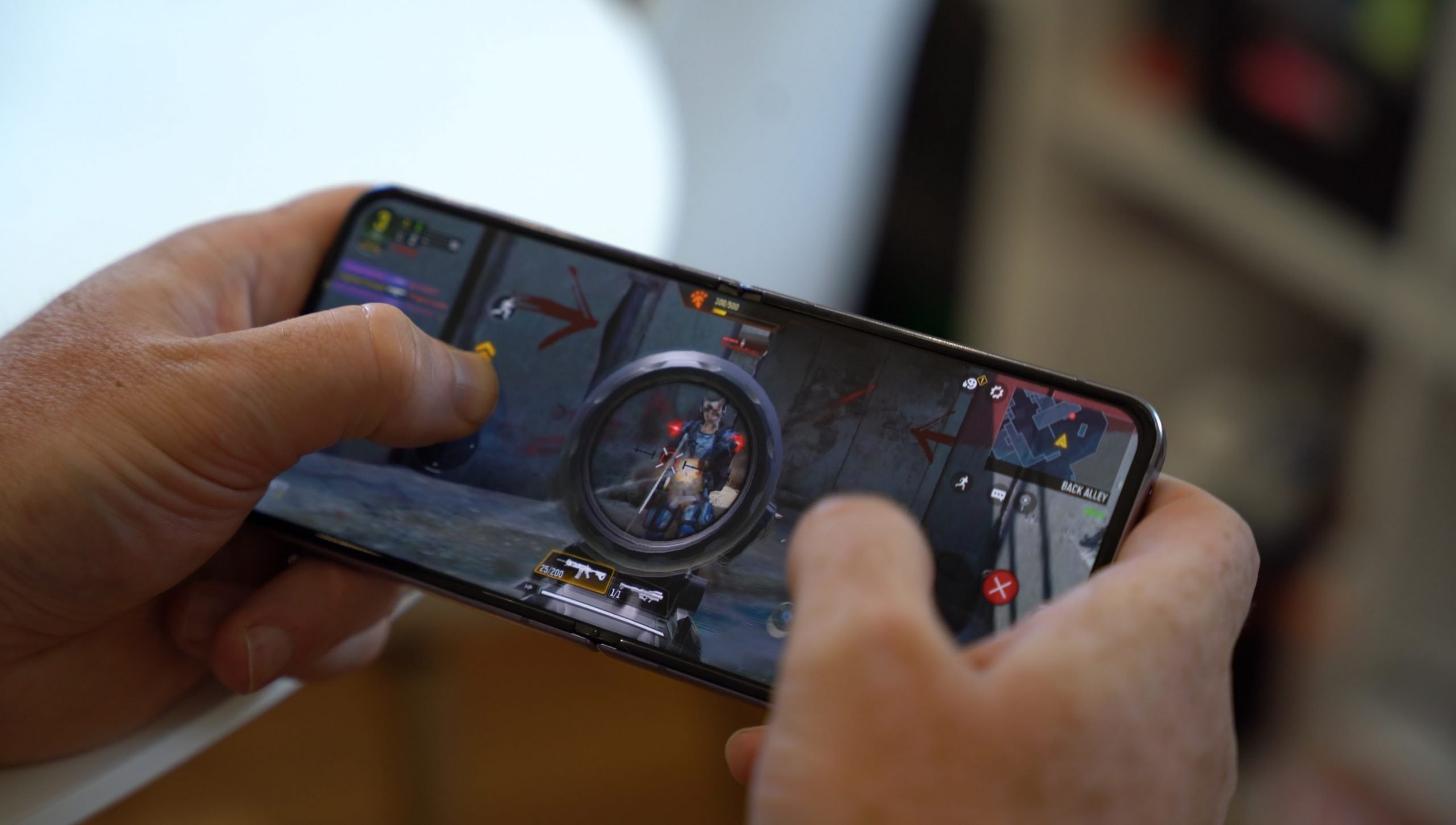
Not every studio plays the bait-and-switch game. Playable ads let viewers try a short slice of the actual game inside the ad before installing, and plenty of studios run straightforward gameplay capture with nothing staged.
Players who install after trying the real thing tend to stay longer, which is why many user acquisition teams now treat honest creatives as an investment rather than a handicap.
How to find out what a game is really like?
- Watch unedited gameplay from real players on video platforms rather than trailers
- Read recent reviews, sorted by lowest rating, to find complaints about bait-and-switch ads
- Check the app store screenshots, which have to show the actual app
- Look at the list of in-app purchases on the store page to see how the game makes its money
- Uninstall early if the game does not match, and request a refund within the store’s window for any purchase you regret
What it says about the industry?
The fake-ad era is a symptom of how crowded mobile gaming has become. When thousands of games compete for the same players, the ad matters almost as much as the game.
Yet the titles that last keep players through genuine quality, and a misleading ad only wins the first install. Players who feel tricked uninstall within days, which is the one number no creative test can hide.
For retro gamers there is a certain irony here. The box art of the eighties promised more than the cartridge could deliver because the hardware had limits. Today’s ads promise something different from the game because, for many studios, the game is only half of the business.
FAQs
Why are mobile game ads so misleading?
Studios test hundreds of ad variations, and the platforms reward the ones that get the cheapest installs, even when they show gameplay that is not in the game.
Are misleading game ads allowed?
Regulators such as the UK’s Advertising Standards Authority have ruled that game ads must represent the actual gameplay, and platforms have rules against misleading ads, though enforcement varies.
Why do I see different game ads from my friends?
Ads are targeted by country, device, operating system and carrier, so the same game can run different campaigns for different people.
How can I report a misleading game ad?
Use the report option in the ad’s menu on the platform where you saw it, and mention the problem in your app store review.