
Most “best action games” lists quietly assume that getting good means putting in months of grinding first. Farm the currency. Unlock the gear.
Then, maybe, your skill starts to matter. That setup is backward for a lot of players who just want a game where practice pays off in the same session it is spent.
We picked seven action games, out of roughly twenty we considered, using one filter: does skill actually decide matches, or does progression decide them for you?
For each title we tracked how many sessions it took before mechanical execution (aim, positioning, dodge timing, whatever the game rewards) started outweighing whatever a player had unlocked.
Titles where a heavily leveled account beats a sharper player regardless of skill got cut. Titles where a beginner with real reflexes can take a set off a veteran within a week or two made the list.
That standard rules out most gacha-style RPGs and idle mobile games, and it is why nothing here asks you to log in daily for a year before PvP feels fair.
What you will find instead: a mech shooter built around two-minute matches, a car-soccer hybrid where cosmetics are the only purchase, a hero shooter with a fully free roster, a fighting game that finally lowered its execution floor, and three single-player titles where death teaches you something specific instead of costing you a grind session.
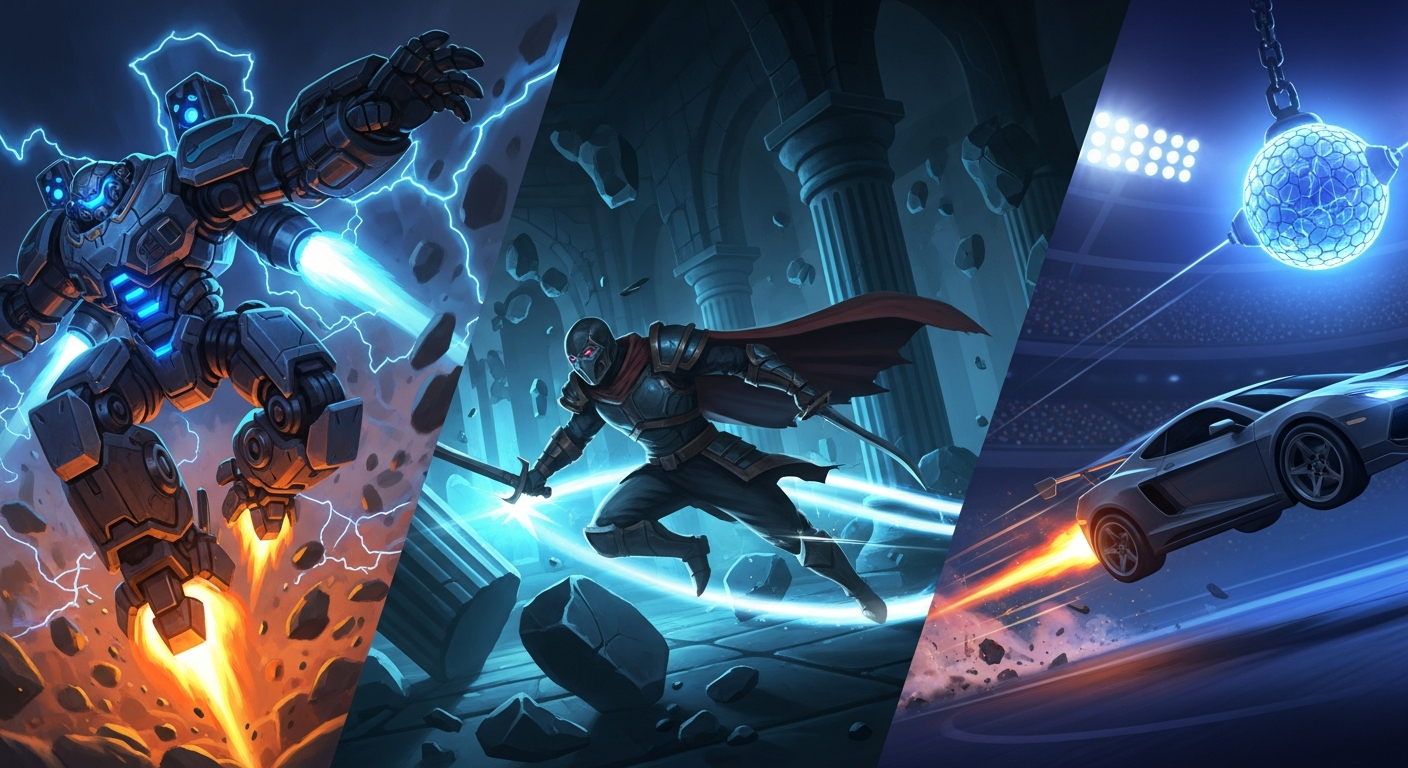
Quick Picks
| Game | Best For | Platform / Price | Verdict |
| 1. Mech Arena: Robot Showdown | Short competitive sessions on mobile or PC | Free-to-play (Android, iOS, PC, Mac) | Two to three minute matches where aim and positioning take over almost immediately. |
| 2. Rocket League | A real esport with zero pay-to-win | Free-to-play (all platforms) | Cosmetic-only monetization and a skill ceiling that takes years to actually reach. |
| 3. Overwatch | Team shooter fans who like hero variety | Free-to-play (PC, console) | Every hero unlocked from the start, so climbing rank is pure mechanics and match knowledge. |
| 4. Street Fighter 6 | Newcomers to one-on-one fighting games | Roughly $60 (PC, console) | Modern controls remove the execution barrier that used to gatekeep the genre. |
| 5. Hades II | Story and structure with short runs | Roughly $30 (PC, Switch, Switch 2) | Full v1.0 release. Runs resolve in under an hour with no permanent grind for power. |
| 6. Dead Cells | A finished, no-treadmill roguelike platformer | Roughly $25 plus optional DLC (all major platforms) | Development is complete, so a build you learn today still works next year. |
| 7. Celeste | Pure movement mastery, solo | Roughly $20 (PC, console, Switch) | No combat, no gear. Every death is about execution alone. |
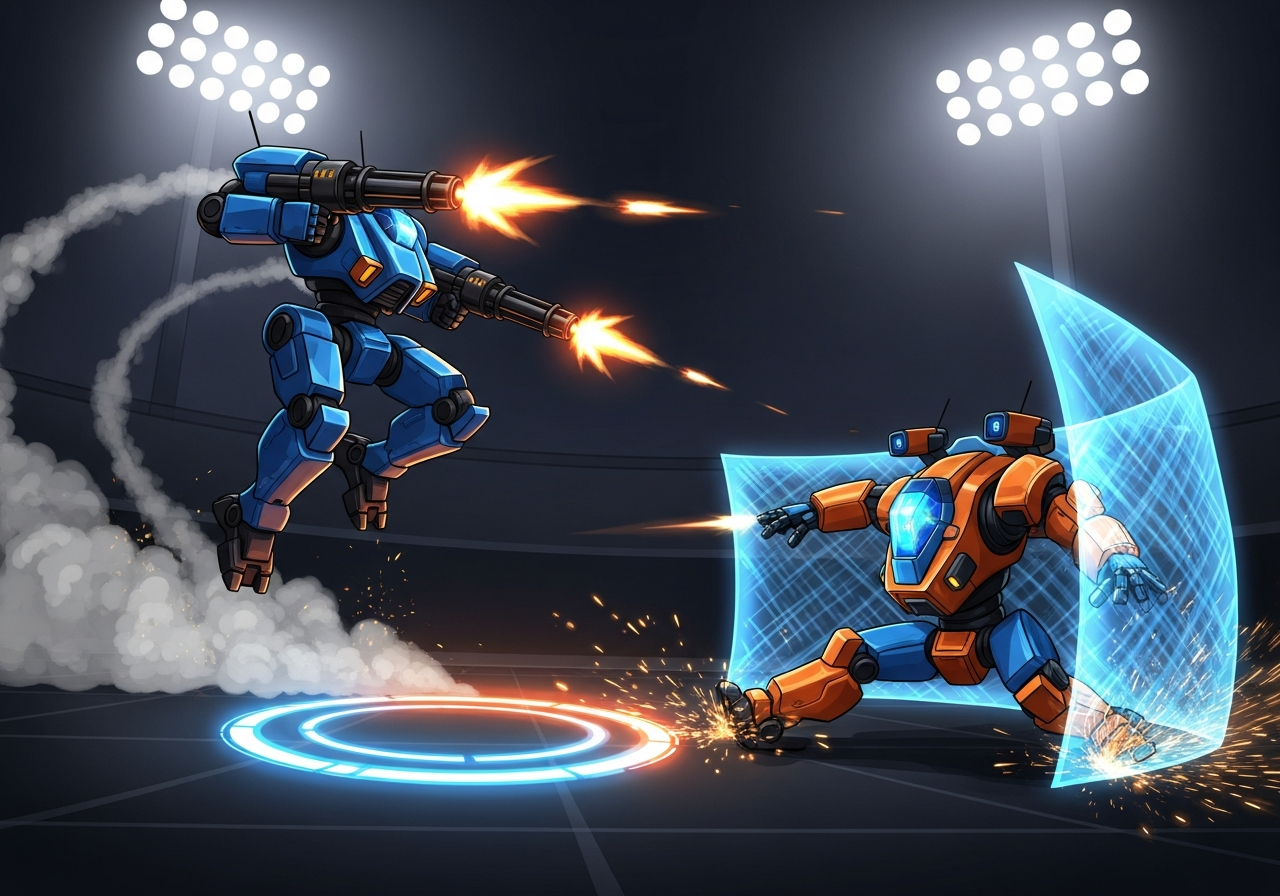
1. Mech Arena: Robot Showdown
Free-to-play 5v5 PvP mech shooter with matches lasting two to three minutes and a roster of more than 25 mechs and 90 weapons, developed by Plarium.
Verdict: The pick for players who want shooter mechanics that respect a lunch break, where aim and positioning decide most fights once your hangar is squared away.
Best for: Commuters and anyone who wants competitive PvP in matches short enough to finish before their coffee goes cold.
Background: Mech Arena launched globally in August 2021 after three years in beta and runs on Android, iOS, Plarium Play for PC, Microsoft Store, and macOS. Plarium built the game specifically to be a pick-up-and-play shooter that works for casual players and dedicated competitors alike, rather than assuming everyone wants a serious ranked grind from day one. Players choose between Free-For-All, Control Point Clash, 2v2 and 5v5 Deathmatch, and Ranked Battles once they reach tier 9, spread across dozens of maps with instant respawns so nobody sits out a match waiting to get back in.
What stands out: matches run two to three minutes, so a single ranked session fits inside an actual break. Because encounters resolve almost immediately, skill maps directly onto aim and mech positioning instead of a lengthy loadout ritual before every fight.
Honest downside: matchmaking weighs Squad Power alongside skill, so a brand new player still needs a couple of weeks assembling a balanced hangar of mechs and weapons before aim and positioning alone start deciding fights consistently. Rushing to unlock every hangar slot early actually makes matches harder, not easier.
If mech combat is what pulled you in, Plarium’s action games lineup carries the same pace and mode variety across its other titles, worth a look once Mech Arena’s basics click.
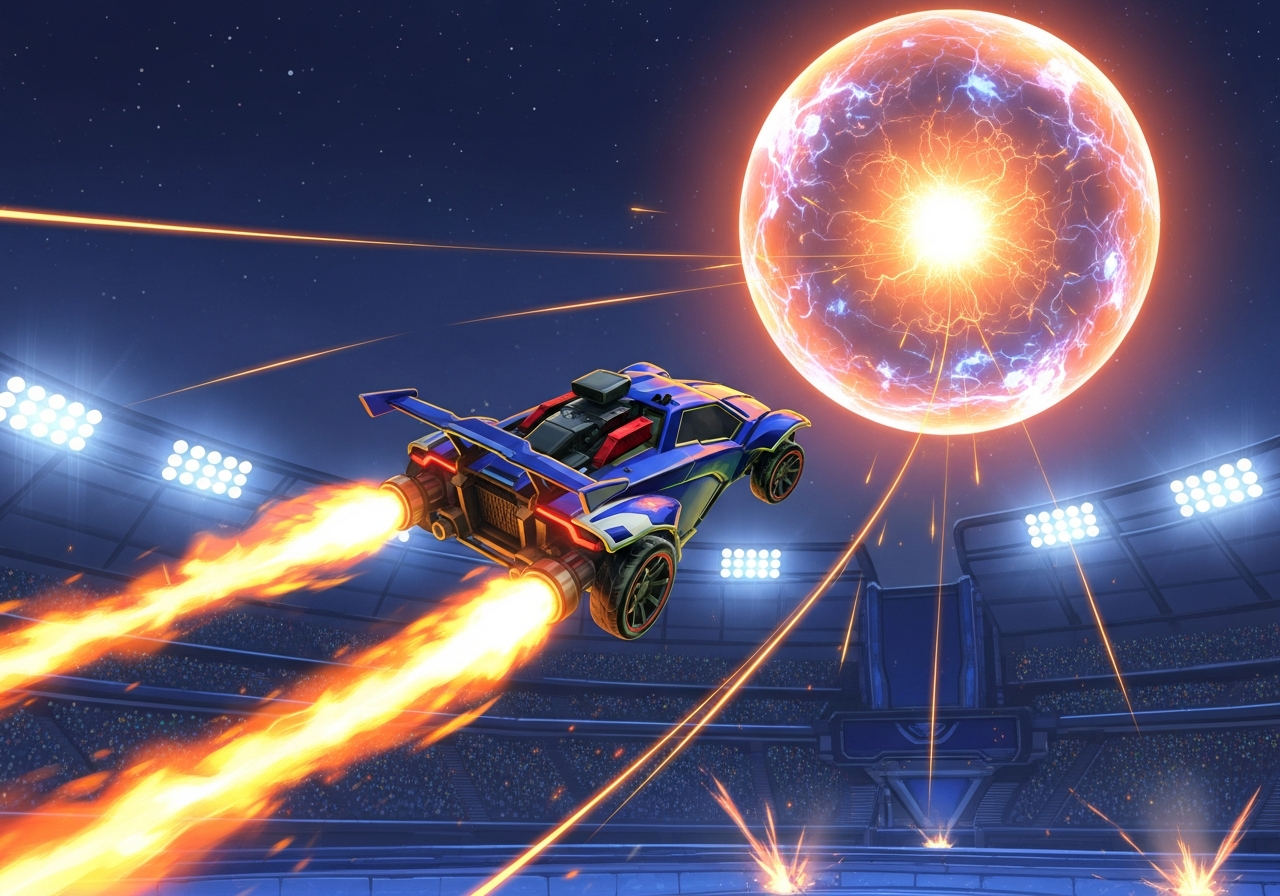
2. Rocket League
Free-to-play since 2020 with cosmetic-only monetization, and a 2026 RLCS championship season carrying a $2.5 million prize pool across three regional splits.
Verdict: The clearest proof on this list that skill ceiling and pay-to-win are unrelated ideas. A sport you can pick up in an afternoon and spend years refining.
Best for: Players who want a real esport with zero gear treadmill, just car, ball, and rocket boost.
Background: Psyonix’s car-soccer hybrid has run competitive seasons since 2015 and went free-to-play on the Epic Games Store in 2020. Matches run 1v1, 2v2, or 3v3, last about five minutes, and every one of the 22 competitive rank tiers, from Bronze up through Supersonic Legend, is earned through match wins alone. Cosmetic items such as skins, decals, and wheels are the only purchase in the game and none of it touches hitbox size, boost strength, or car speed. The 2026 RLCS championship season still carries a $2.5 million prize pool according to recent esports coverage, a sign the competitive scene has real stakes years after the free-to-play switch.
What stands out: the physics sandbox is completely open, so a new player and a Grand Champion are working from the exact same rules. The entire gap between them is execution, nothing else.
Honest downside: the mechanical skill ceiling is famously unforgiving. Aerial hits, flip resets, and fast aerials take real hours in training packs before they show up reliably in matches, and by most tracking, the gap between a low Supersonic Legend and a top-100 SSL player is wider than the entire climb from Bronze to Champion.
3. Overwatch
Free-to-play 5v5 hero shooter with more than 40 heroes, rebranded from Overwatch 2 back to simply Overwatch in February 2026 as part of a year-long story arc.
Verdict: Pick this for short, team-based competitive matches, as long as you don’t mind learning a rotating cast of specialists instead of one character.
Best for: Shooter fans who like coordination and hero mastery over pure aim, and want matches that wrap up in under fifteen minutes.
Background: Role Queue, one tank, two damage, two support, remains the primary competitive mode, with 6v6 Open Queue running as a popular alternative in its own right rather than a side experiment. Every hero has been free to unlock since 2024, so nothing in the roster sits behind a paywall or a grind. The February 2026 relaunch pushed concurrent Steam player counts past 160,000 on its busiest weekend, evidence the competitive base is active rather than coasting on old momentum. Competitive seasons reset roughly every eight weeks, refreshing rank and hero balance together.
What stands out: because every hero is free and season rewards are purely cosmetic, climbing rank comes down to mechanical aim, positioning, and hero knowledge rather than how much of the roster you have unlocked.
Honest downside: 40-plus heroes means real match knowledge (counters, cooldown timing, ultimate economy) takes longer to build than the raw mechanics do, and competitive rank resets every eight-week season, so climbing is something you repeat rather than finish once and forget.
4. Street Fighter 6
Launched June 2, 2023 with a Modern control scheme that maps special moves to single-button inputs at a reduced damage cost, alongside the traditional Classic scheme.
Verdict: The fastest route into real one-on-one fighting game skill testing, especially if you start on Modern and graduate to Classic later.
Best for: Players who want fighting game depth without grinding execution just to throw a fireball consistently.
Background: Capcom built Modern controls specifically to remove the quarter-circle motion inputs that have kept newcomers out of fighting games for decades, while leaving Classic controls untouched for players chasing the full moveset. Both schemes share the same ranked ladder. Pro players still favor Classic for complete combo access, but Modern players regularly place in tournament brackets rather than staying confined to casual lobbies. The trade-off is explicit and public: Modern hits with a built-in damage penalty and some characters lose specific moves entirely, so climbing on Modern rewards fundamentals like spacing and blocking over combo memorization.
What stands out: you can be landing meaningful punishes and anti-airs within your first evening, something close to unthinkable in Street Fighter titles before 2023.
Honest downside: Modern’s damage penalty and missing moves put a real ceiling on how far it carries you. Serious competitive results still lean Classic, so at some point you will likely want to make the switch if you want the entire toolkit.
5. Hades II
Supergiant Games’ roguelike exited early access into a complete version 1.0 release on September 25, 2025, for PC, Nintendo Switch, and Switch 2.
Verdict: Proof a roguelike can reward pure run-to-run skill growth without demanding a permanent grind for power.
Best for: Players who want real story and structure around their combat, but with each attempt resolved in well under an hour.
Background: Playing as Melinoe, the game hands you fresh boons every run instead of asking you to slowly stack permanent stat bonuses, so build reading and reaction time matter more than hours logged. Meta-progression such as Fated Persuasion, weapon Aspects, and familiar bonds unlocks at a pace tied to story beats rather than repetitive currency farming. The full v1.0 patch added the complete final act and ending after roughly a year and a half in early access. Combat blends real-time dodging, parries, and elemental Magick, systems that reward pattern recognition immediately instead of after a long warm-up grind.
What stands out: a single run rarely takes more than 30 to 40 minutes, so a bad run costs you a slice of an evening, not the evening itself, and every attempt teaches a specific dodge timing or boon interaction you can use on the next try.
Honest downside: there is no PlayStation or Xbox release confirmed as of mid-2026, so console players outside Nintendo’s ecosystem are shut out entirely, and the early biomes can feel repetitive for the first several hours before your build starts clicking.
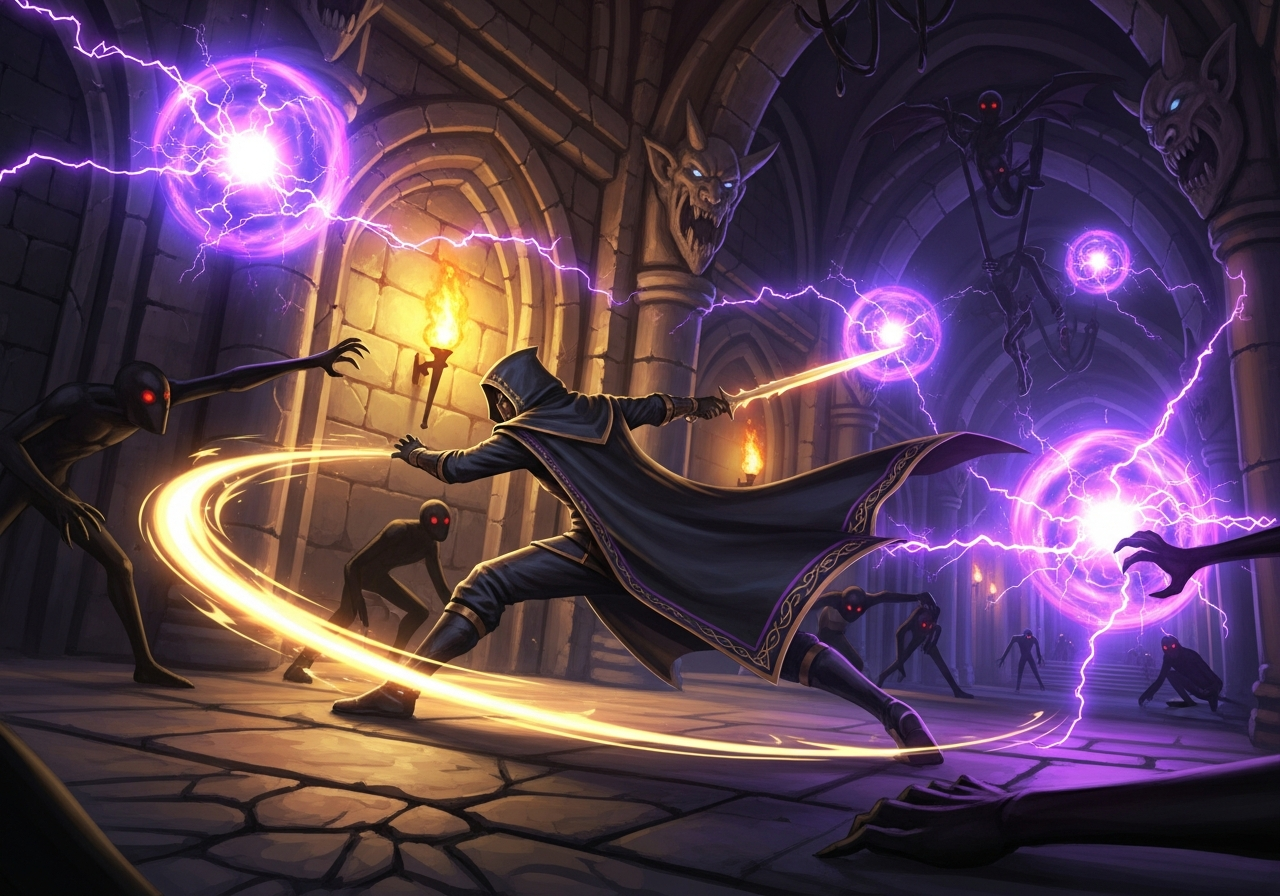
6. Dead Cells
Motion Twin and Evil Empire declared their “final major update” in 2024, closing out seven years of development across 35 updates and five paid DLC packs.
Verdict: The finished version of the modern action-platformer roguelike. No live-service treadmill, no seasons to keep up with.
Best for: Players who want a Metroidvania-style skill test, dodge-rolling, parries, weapon combos, that is done being built, so nothing you learn today gets rebalanced out from under you next patch.
Background: Set in a procedurally rearranged castle, Dead Cells strips away permanent character levels in favor of permanent unlocks (new weapons and mutations added to the shared item pool) while your actual combat stats reset every run. That design keeps the emphasis on reflexes and pattern memorization instead of gear score. The Castlevania crossover DLC, Return to Castlevania, added new weapons and a pair of gothic biomes and remains one of five paid expansions available to players chasing more content. Development formally wrapped with the final major update, a deliberate line under the game rather than an ongoing content pipeline.
What stands out: the base game is finished and balanced end to end, so a build that works today will still work in a year. That is a rare guarantee in this genre.
Honest downside: getting the full experience means buying the base game plus up to five DLC packs, and permadeath resets your gear every run by design, which some players read as its own quiet form of repetition even though it never gates you behind currency grinding.
7. Celeste
A finite precision platformer from Extremely OK Games with an adjustable Assist Mode that lets any player reach the ending without erasing the game’s much harder optional B-Side and C-Side chapters.
Verdict: The purest test of movement skill on this list. One screen, one mechanic set, and total clarity about why you died.
Best for: Players who want single-player platforming built entirely around dash, jump, and climb, with a story that does not overstay its welcome.
Background: The core story runs roughly eight to ten hours across nine chapters, short by modern standards, and every death (there will be hundreds) resets you instantly to the start of that one short screen rather than a distant checkpoint. Assist Mode lets players slow the game’s speed, add stamina, or even grant invincibility, all without blocking any other content, while purists can ignore it entirely. Each chapter unlocks a remixed B-Side, and the hardest chapters unlock C-Sides, harder still, so the skill ceiling extends well past the main campaign for anyone chasing it.
What stands out: with no combat and no loadout, every death is unambiguously about your own execution. That makes improvement feel immediate rather than tied to anything you grinded for.
Honest downside: the core campaign is short. Once you have cleared it without touching the optional B-Sides and C-Sides, you will have seen most of what the game offers in a single weekend.
How We Picked These?
We started from a working list of about twenty action games spanning mobile shooters, hero shooters, fighting games, and roguelikes, then narrowed it against three criteria: whether monetization can buy competitive power, whether a single session (match or run) fits inside a lunch break or a commute, and whether a beginner with real mechanical skill can beat a veteran within their first two weeks.
We leaned on official patch notes, developer statements, and each game’s own ranked or progression documentation rather than personal rank claims, since matchmaking systems and control schemes are the parts of these games that actually determine how fast skill translates into wins.
Esports prize pools and active player counts were used as a rough check that a game’s competitive ceiling still means something today, not just at launch.
A couple of gacha-style RPGs and one long-session MOBA got cut for requiring weeks of account building before PvP felt remotely fair.
Where to Start?
Start with whichever fits your day, not your ambition. Five minutes between meetings points you toward Mech Arena or Rocket League, since both prove the argument in the very first session: better positioning and better aim start winning matches immediately, no waiting required.
A free evening points you toward Hades II or Celeste, where every run or death teaches you something you can use on the next attempt.
What all seven avoid is the trap this list set out to dodge. None of them make you wait months before your own hands are the reason you are winning.